HISTORY
Three centuries of the art of tanning
The legacy of the Rec of Igualada, from tradition to European innovation
A legacy that builds the future
The trajectory of the leather sector in Catalonia is the story of a business community that has adapted to every historical period: from the guild organisation of the 17th century to today’s challenges of sustainability, traceability and innovation.
This collective spirit is what defines Leather Cluster Barcelona today: the natural evolution of a model that has spent more than three centuries proving that working together is the best guarantee of continuity, quality and leadership.
JOURNEY
A journey through the history of Catalan leather
From the guild ordinances of the 17th century to the environmental innovation of the 21st, every stage reflects the collective spirit that defines Leather Cluster Barcelona today.
1693
Ordinances of the Tanners’ Guild
The history of leather in Catalonia has been written from its origins through guild culture and a collective spirit. In 1693, the formal drafting of the Ordinances of the Tanners’ Guild (Gremi de Blanquers) marked a turning point by establishing pioneering rules governing apprenticeship, the strict practice of the craft and the first product quality standards. The tanners of the time understood that collective organisation was the only way to guarantee rigour in manufacturing, protect the activity against the fiscal or regulatory changes of the era and ensure the continuity of the craft. Thus was born a craft culture based on rigour, attention to detail and a shared vision of excellence that has endured over the centuries.
18th–19th centuries
Pioneering strategic alliances
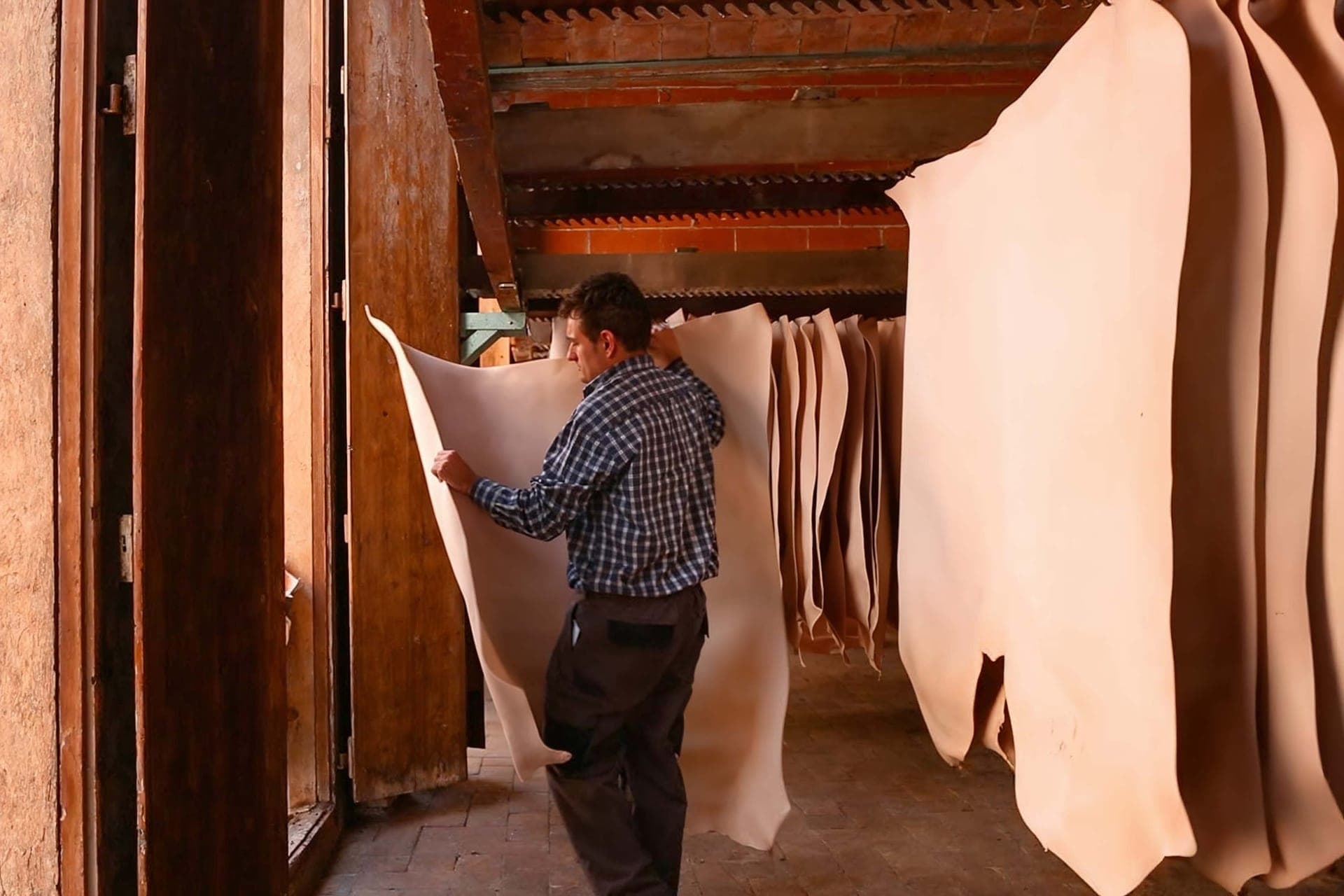
Throughout the 18th and 19th centuries, joint action became the central pillar of Igualada’s business community, turning cooperative work into a fundamental tool of competitiveness long before the modern concept of a “cluster” existed in the global economy. The district’s entrepreneurs designed practical, effective collaboration mechanisms to strengthen the sector: from the collective purchase of raw materials to gain bargaining power, to coordinated legal defence against regulations and taxes, through shared management of infrastructure and the regulation of water use. From the very beginning, joining forces established itself as the territory’s great model of strategic competitiveness.

1913–1917
Industrial cooperatives and resource optimisation
In the early 20th century, Igualada’s industrial district took a decisive step towards modernisation by promoting pioneering associative initiatives. In a complex and changing international context, cooperation became the key driver for optimising resources and keeping the factories viable. During this period, the first industrial cooperatives were created, jointly designed to use and valorise the organic by-products of the tanning process, turning them into resources for other secondary industries. This pioneering vision of efficiency and integral use marked the beginning of responsible resource management and demonstrated the sector’s capacity to anticipate.

1949–1958
Boosting elite technical training
In the mid-20th century, the sector underwent a profound transformation of its business and product model. The collective strategy enabled a gradual, successful transition from a catalogue focused almost exclusively on sole leather to a more diversified, flexible, high-added-value industry, aligned with the new demands of contemporary fashion and design. To lead this technological and scientific leap, the business community made a major collective effort to found the Tannery School (Escola de Teneria). The creation of this higher-education centre was a fundamental milestone in the modernisation of the sector, providing tanneries with elite engineers, scientists and technicians capable of taking Catalan leather to the highest level of international standards.

1970s–80s
Internationalisation and sector promotion
With production consolidated under the highest quality standards, business cooperation turned to the export strategy. The collective spirit of Igualada’s companies was the lever needed to open the doors of global markets on a large scale. The district’s tanneries committed to a unified, joint presence at the world’s most prestigious international trade fairs, creating coordinated export structures and solid commercial networks. At the same time, sector promotion campaigns consolidated the prestige of Catalan leather in global markets, positioning genuine leather as a 100% natural, noble and long-lasting product and clearly differentiating it from the new synthetic substitutes then appearing.

1975–1990
The beginning of the environmental transformation
From the 1970s onwards, leather faced the challenge of environmental sustainability. Rather than opting for fragmented individual solutions — which would have been technically unfeasible — the sector anticipated the future and designed the first coordinated actions to address the challenges of urban sanitation and the impact of economic activity. The business community firmly committed to a model of shared responsibility, investing in cleaner technologies and applying solutions directly at source. Revolutionary projects date from this period, such as collective systems for recovering organic hair and the advanced reuse of chromium in tanning baths — practical milestones that transformed the sector’s environmental awareness.
1994
Vision and birth of the cluster model
In the mid-1990s, the sector underwent a profound strategic evolution. Companies, research centres and institutions formally recognised that their historical trajectory and their way of collaborating matched perfectly the characteristics of a “cluster”: a cooperation structure organised to gain global competitiveness. In 1994 this structure was formalised, opening a new stage in which the collective culture was reinforced through shared long-term projects. Commercial collaboration gave way to an interconnected alliance in applied research, university–industry knowledge transfer and proactive adaptation to future regulations. Transforming tradition into a modern cluster did not break with the legacy; it made it evolve with a common purpose.
1999–2005
Creation of IDR: joint management of wastewater treatment
The creation of the Societat Igualadina de Depuració i Recuperació (IDR) in the late 1990s, and the subsequent commissioning of its own biological treatment plant, marked an absolute turning point in European industrial history. The private sector directly and jointly assumed full responsibility for the shared treatment of its wastewater. This large-scale collective project required unprecedented financial investment and organisational effort from the member companies. The construction of this internationally recognised infrastructure demonstrated the real commitment of the Catalan tanning industry to managing the water cycle with the utmost transparency, rigour and operational excellence, consolidating the sector’s environmental leadership.
2003–2012
Regulatory vanguard and clean technologies
During the first decade of the 2000s, the commitment to shared management and continuous improvement translated into excellent technical dialogue and rigorous negotiation with the various public administrations. The cluster took a very active part in drafting the demanding European guidelines on best available techniques (IPPC), working directly with the authorities in Brussels. This first-rate involvement allowed the cluster’s companies to anticipate and progressively implement highly efficient, sustainable systems and processes. This sustained modernisation effort consolidated an industrial model shielded against regulatory change and highly attractive to international luxury brands seeking industrial partners of the utmost trust.
2017
Innovation and advanced waste management
In 2017, the cluster’s collective environmental management model took a further leap in the development of its infrastructure engineering. The IDR treatment plant upgraded its operating system and extended its authorised remit to become an integrated manager of industrial liquid waste. This technological innovation has definitively optimised the operational efficiency and economic sustainability of the entire cluster ecosystem. By centralising processes and constantly seeking new avenues for valorising materials, industrial costs are reduced and measurable, rigorous progress is made towards energy optimisation and the maximum use of matter.